 |
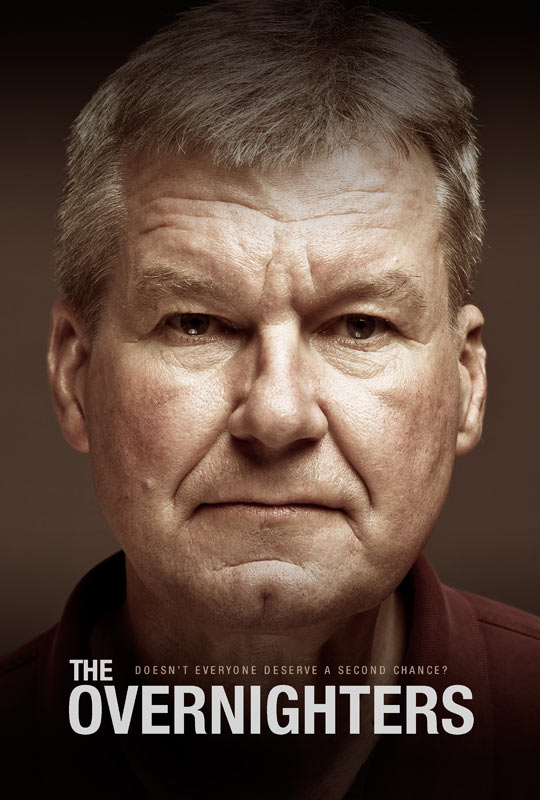
| The Overnighters by Jesse Moss Special Jury Prize --Sundance; 102 minutes |
In broad strokes, The Overnighters tells the story of one religious man’s attempt to serve the housing needs of homeless migrant workers in his small town. In many ways, Moss’s documentary tells a simple story that evenhandedly pits Pastor Reinke and his Overnighters project against the disgruntled congregation, his irritated neighbors, the city council, and at least one intrepid local newspaper reporter from the Williston Herald. But, fortunately, those are only broad strokes and what might’ve passed as an adequate US-vs-THEM drama, Moss makes superb in the details.
After the 2008 recession, lured by the lucrative employment prospects promised by the fracking boom, many aspirant workers from all over the country packed their bags and trekked to Williston in hopes of securing decent paying jobs produced by the Shale-oil industry. Due, in part, to the rapid influx of workers, the flatfooted town couldn’t accommodate the housing & employment needs of everyone. This is where Pastor Reinke steps in. He sees distressed men without shelter and invites many of them to stay in his church, the churches’ parking-lot, and eventually his own home.
The fear and tension in the community rose to a fever-pitch in spring of 2012, when the body of Sherry Arnold, a 43 year-old Sidney, Mt. High School math teacher, was found near the outskirts of Williston. The culprits were migrant workers from Colorado. If relations were strained between the locals of Williston & the newcomers before, the death of Sherry Arnold only escalated the community’s apprehensiveness. Stoking the flames of this anxiety, the local paper frequently publishes articles on the uptick in crime and the criminal histories of the new-arrivals--drug addicts, sex offenders, and various other felons.
While it seems hyperbolic to compare a few thousand migrant-workers in Williston, ND to The Dust Bowl Migration of the 30s or even Grapes of Wrath, it’s fair to call The Overnighters Steinbeckian. Moss could’ve easily made a film for political ideologues crammed with talking heads & professorial pundits rambling about religious bigotry, parental responsibility, fracking pollution, backwater provincialism, hyper-capitalistic resource exploitation by the oil industry, the “American Dream”, poverty in America, and high-rates of unemployment; yet he instead eschews all that for an incredibly humane--perhaps even romantic--look at the lives those greater issues touch.
Moss doesn’t want to convince viewers, so much, of who’s right & who’s wrong but rather to capture the complicated life of Pastor Reinke whose conflicted persona, while incredibly idiosyncratic has a near-mythic capacity to seem universal, steals the heart of the film. Torn between his religious conviction to serve his parish, his family, and those the bible calls his “neighbor”--both literally and figuratively--, Reinke finds himself compelled by a rare motive of servitude that seems reckless, unbalanced, and yet somehow refreshing.
The Overnighters, however, isn't merely about Pastor Reinke. Moss collects (or, rather, captures) a motley ensemble of characters in this film whose lives seem burdened by shadowy pasts and yet still pregnant with prospects of future prosperity. Variety's Chief Film Critic, Justin Chang introduces the cast:
"Their experiences are revealed in stray fragments among those we meet are Alan Mezo, an ex-con from Spokane, Wash., who has since cleaned up his act and helps Reinke run the Overnighters program; Keegan Edwards, from Antigo, Wis., who’s trying to support his girlfriend and baby son; and Keith Graves, a truck driver and family man from Los Angeles."Throw in there Paul Engel, a New Yorker who eventually turns against the pastor because Reinke kicks him out of his home to make room for Keith, a registered sex offender--under the same roof as his wife and children. Each of these characters help contribute to the film's complexity. Alan, a paragon of service throughout most of the film, eventually and unexpectedly "flips script" on account of backlash from withheld criminal history. Keegan, a young guy with "the Buddy Holly glasses, and the beautiful face" who seemed poised to succeed, never really climbs the employment latter. These are just a few of the folks that slip in & out of film to give The Overnighters its remarkable multilayered tone.
From the reviews subsequent to its release, it's obvious that The Overnighters is a monumental achievement by Moss and Cinéma vérité. At least one key to the film's success isn't so much what it says but what it leaves out and The Overnighters appropriately leaves quite a few questions for viewers to contemplate. What's even more invigorating, though, is the broader discussions it provoks about ethics in film, about morality in Christian service, about corporate responsibility, about emotional & environmental havoc of the shale-boom, to name only a few. Suffice it say, that even though the viewer's in for one hell of a ride--not to mention one knockout twist at the end--, the ride doesn't stop when the credits roll. And that's what makes a great film.
Jesse Moss, Director of Speedo: A Demolition Derby Love Story and Full Battle Rattle, spent 18 months shooting his newest film, The Overnighters. Without much financial support, between April 2012 and September 2013, Moss made several back-&-forth trips from his home in San Francisco, CA to Willinston, ND camping out on a cot in the church like the rest of the so-called “overnighters”.
------------------------------------------------------------
BuzzFeed "10 Things To Know About The Overnighters" by Kate Aurthur
Rolling Stone “Review” by Noel Murray
Variety “Review” by Justin Chang
Paste “Review” by Geoff Bershire
Salon “Review” by Andrew O'Hehir
Washington Post “Review” by Stephanie Merry
RogerEbert “Review” by Godfrey Cheshire
Hollywood Reporter “Review” by David Rooney
The Dissolve “Review” by Scott Tobias
Nonfics “Review” by Christopher Campbell
IndieWire “Review” by Eric Kohn
IndieWire “Review” by Katie Walsh
AV Club “Review” by A.A. Dowd
IconCinema! “Review” Jordan M. Smith
WGTC “Review” Jordan Adler
Stanford Daily "Review" Ena Alvarado
Sundance “Interview” with Tabitha Jackson
Comments